
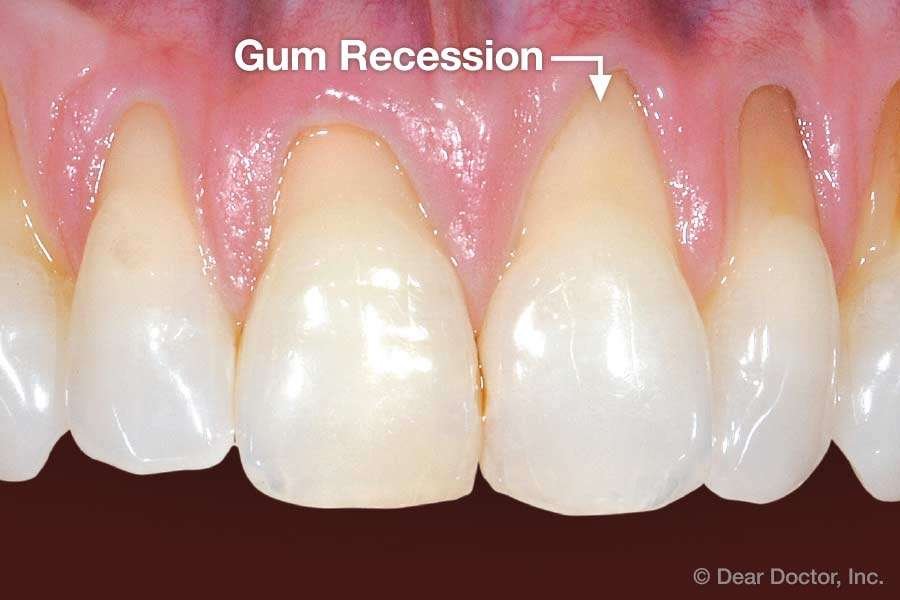
Gum Recession
Gum recession is a dental disease. Most people are unaware that their gums are receding because it is a gradual phenomenon. The first sign of gum recession is usually tooth sensitivity or the discovery that a tooth seems slightly longer than it should be. A gap is usually felt near the gum line.
Gum recession is also called gum recession, and the root surface is exposed, which manifests as “lengthening” of teeth, exposed roots, and increased gaps between teeth. Gum recession is often accompanied by tooth sensitivity to hot and cold, red and swollen gums, and bleeding. If left untreated, healthy gums may become less and less, and eventually all “sacrificed”.
Why do gums recede?
1. Periodontal inflammation
In fact, periodontitis is the culprit for gum recession. When tartar accumulation causes periodontal inflammation and alveolar bone absorption, it will cause gum recession, root exposure, and increased gaps between teeth.
This is an irreversible process, what does it mean? That is to say, gum recession caused by periodontitis is difficult to remedy, and may even be more obvious after periodontal treatment eliminates inflammation.
Therefore, once you find signs of tartar, you must see a periodontist as soon as possible! Don’t wait until it’s too late to make up for it! Of course, the best way is to check regularly, clean your teeth regularly, do a good job of prevention, and say no to periodontitis!
2. Wrong way of brushing teeth
Using a hard-bristled toothbrush or brushing your teeth horizontally for a long time “vigorously” can also cause gum recession, and at the same time cause tooth damage, that is, wedge-shaped defects.
Using dental floss in a “straight-forward” way can also cause gum recession, which is mainly manifested as “cracked” gums.
3. Orthodontics
During orthodontics, it is often necessary to move teeth toward the lips. Unfortunately, the bones around our teeth near the lips are the thinnest. If oral hygiene is poor during orthodontics or after orthodontics, plaque is accumulated. Under the dual stimulation of orthodontic force and bacteria, gum recession may come unexpectedly.
If your brushing method is still wrong at this time, it will definitely make things worse…
4. Occlusal trauma and bad habits
When teeth are not arranged neatly, it is easy for individual teeth to have excessive occlusal force. Abnormal occlusal force will cause trauma to teeth and periodontal tissues, which will also cause gum recession.
Bad habits such as picking gums with fingers can also cause gum recession. If you have this habit, you must correct it immediately!
How to treat gum recession?
Gum recession cannot be reversed. This means that the gingival tissue will not grow again after recession. However, treatment can be used to prevent further gum recession.
Minor gum recession can be prevented by supragingival and subgingival scaling. If gum recession is more severe, it can be regenerated, or soft tissue grafts can be used to graft or attach them to “areas of lost gum tissue around the teeth.”
How to Prevent Gum Recession
The best way to prevent gum recession is to take very good care of your mouth. Brush your teeth and use dental floss or interdental brushes every day, and visit your dentist at least twice a year, or as recommended by a dentist you trust. If your gums are receding, your dentist will most likely want to see you more often.
Always use a soft-bristled toothbrush and ask your dentist to show you the right way to brush your teeth. If the cause of gum disease is a malocclusion or sore gums, consult a specialist on how to correct it.
Other preventive measures include:
Avoid tobacco consumption;
Eat a balanced, healthy diet.
Control any changes in your mouth.
Maintain optimal dental hygiene.
Dental Implants
Book Now
Cantonese: (866) 405-9737
Invisible Correction
Why choose Dr. Shi Liangzhang?
- Dr. Shi received professional surgical training at Columbia University, Hackensack Medical Center and New York University.
- He has been doing minimally invasive tooth extraction for many years. Many patients are very satisfied with Dr. Shi’s treatment and also recommend their friends and family for dental treatment.
- Dr. Shi’s method of wisdom tooth extraction is minimally invasive, easy to treat, small wound, and quick recovery.
If you have questions about wisdom teeth, you may call or use our online consultation. We provide free consultation.