Introduction to Complete Dentures
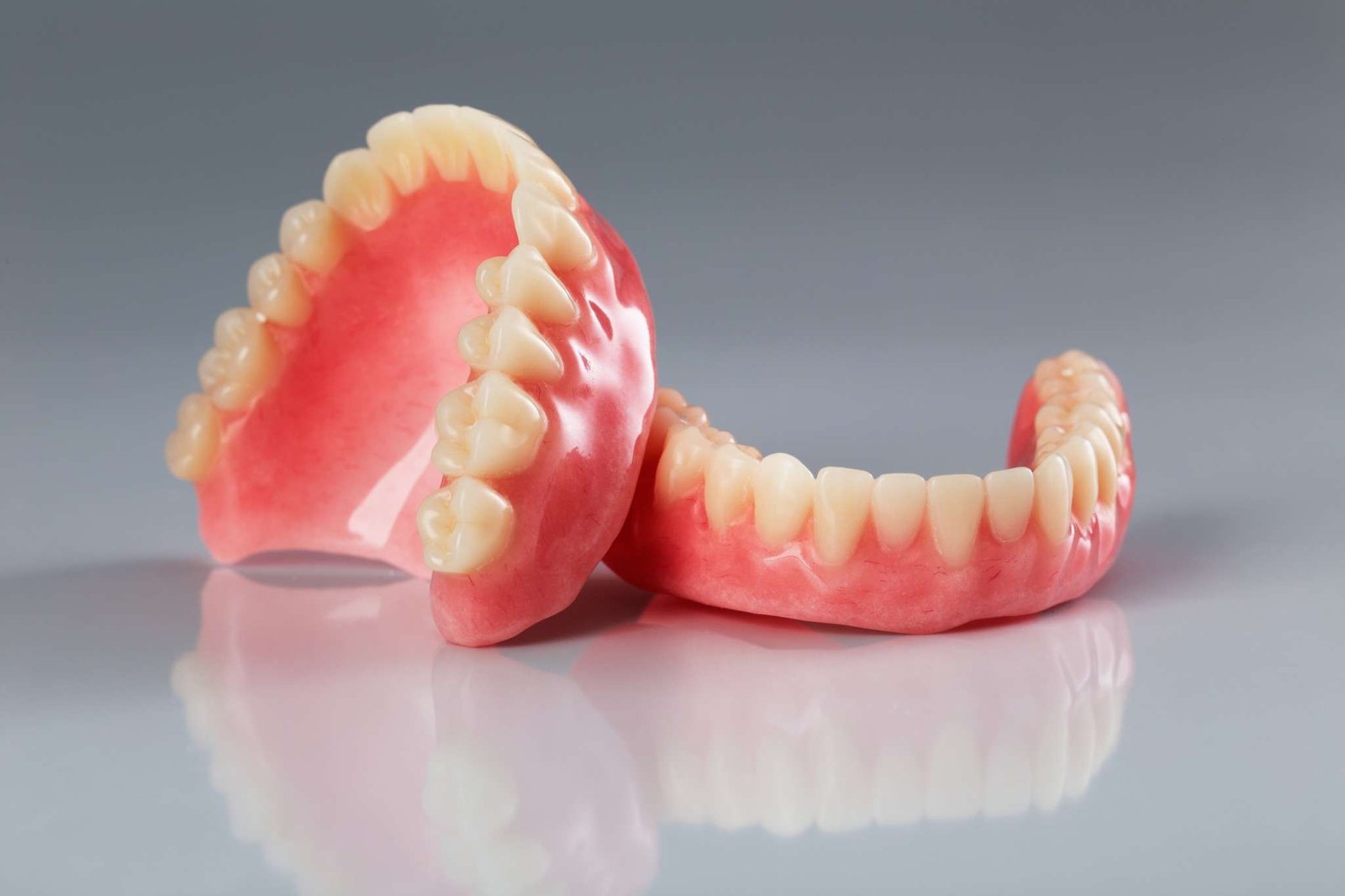
Complete dentures consist of two parts: artificial teeth and bases. The denture bases are closely fitted with the edentulous jaw mucosal tissues and the edge closure generates adsorption force and atmospheric pressure, which allows the dentures to be adsorbed on the upper and lower alveolar ridges, restore the patient’s defective tissues and facial appearance, and restore chewing and pronunciation functions. The mucoperiosteum and bone tissue covered by the denture bases bear the occlusal pressure of the dentures.
Structure of Complete Denture:
Complete dentures consist of two parts: bases and artificial teeth. Artificial teeth are used to restore the appearance, occlusion and pronunciation functions of the natural dentition. The function of the base is to connect artificial teeth, restore the defective soft and hard tissues, and fix the dentures on the upper and lower edentulous jaws respectively. Artificial teeth and part of the base occupy the positions of the original natural teeth and alveolar processes. The bases extend to the labial and buccal sides in a wing shape, located in the gap between the alveolar ridge and the labial and buccal soft tissues in the oral vestibule, called the labial/buccal wing. The lingual base of the mandibular denture is located between the lingual side of the alveolar ridge and the tongue, which is called the lingual wing. The palatal base of the maxillary full denture covers the entire upper palate to the junction of the hard and soft palate.
When you first wear a full denture, you will not adapt to it immediately. You will feel a foreign body, unclear speech, increased saliva secretion, nausea, etc. You must use it patiently and gradually adapt. The doctor must also make several necessary modifications and adjustments before it will gradually fit. In order to speed up the adaptation when the denture is first worn, you can also wear it while sleeping. During this period, you should practice pronunciation and bite repeatedly. It is not advisable to chew food with the denture in the first few days of wearing. Only the patient is required to make a central bite and pronunciation. After getting used to it, chew food with the denture, starting with soft food such as noodles and gradually transitioning to chewing general food. Try to use your front teeth as little as possible to chew apples, pears and other foods to prevent the denture from falling off. Sometimes when the denture is first worn, it may press and grind the gums or oral mucosa to ulceration, so it can be temporarily removed and not worn. But you must wear it the day before the visit so that the doctor can correctly check the cause and location of the pain and make modifications. Keep the dentures clean and hygienic. After each meal, you should take out the dentures and rinse them before wearing them and rinsing your mouth. Before going to bed, you should also take out the dentures and clean them with a small soft-bristled toothbrush, focusing on the inner surface of the denture, because this part is most likely to have residual bacteria and plaque, which is the most harmful to the oral tissue. After brushing, the full dentures should be soaked in clean water. It is not recommended to wear them when sleeping. This is conducive to the oral mucosa that bears the pressure of the dentures for a long time during the day to get a good rest, and it is not easy for the small amount of bacteria and plaque remaining on the dentures to grow, reducing the harm of bacteria and plaque to the oral cavity. Do not use hot water to wash and soak the dentures to extend the service life of the dentures. Do not place the dentures anywhere after taking them off to avoid loss or damage. Never put the dentures aside. Over time, the oral tissue and the shape of the dentures will change, making it more difficult to wear, and finally you can only redo them.
Dental Implants
Book Now
Cantonese: (866) 405-9737
Invisible Correction
Why choose Dr. Shi Liangzhang?
- Dr. Shi received professional surgical training at Columbia University, Hackensack Medical Center and New York University.
- He has been doing minimally invasive tooth extraction for many years. Many patients are very satisfied with Dr. Shi’s treatment and also recommend their friends and family for dental treatment.
- Dr. Shi’s method of wisdom tooth extraction is minimally invasive, easy to treat, small wound, and quick recovery.
If you have questions about wisdom teeth, you may call or use our online consultation. We provide free consultation.